
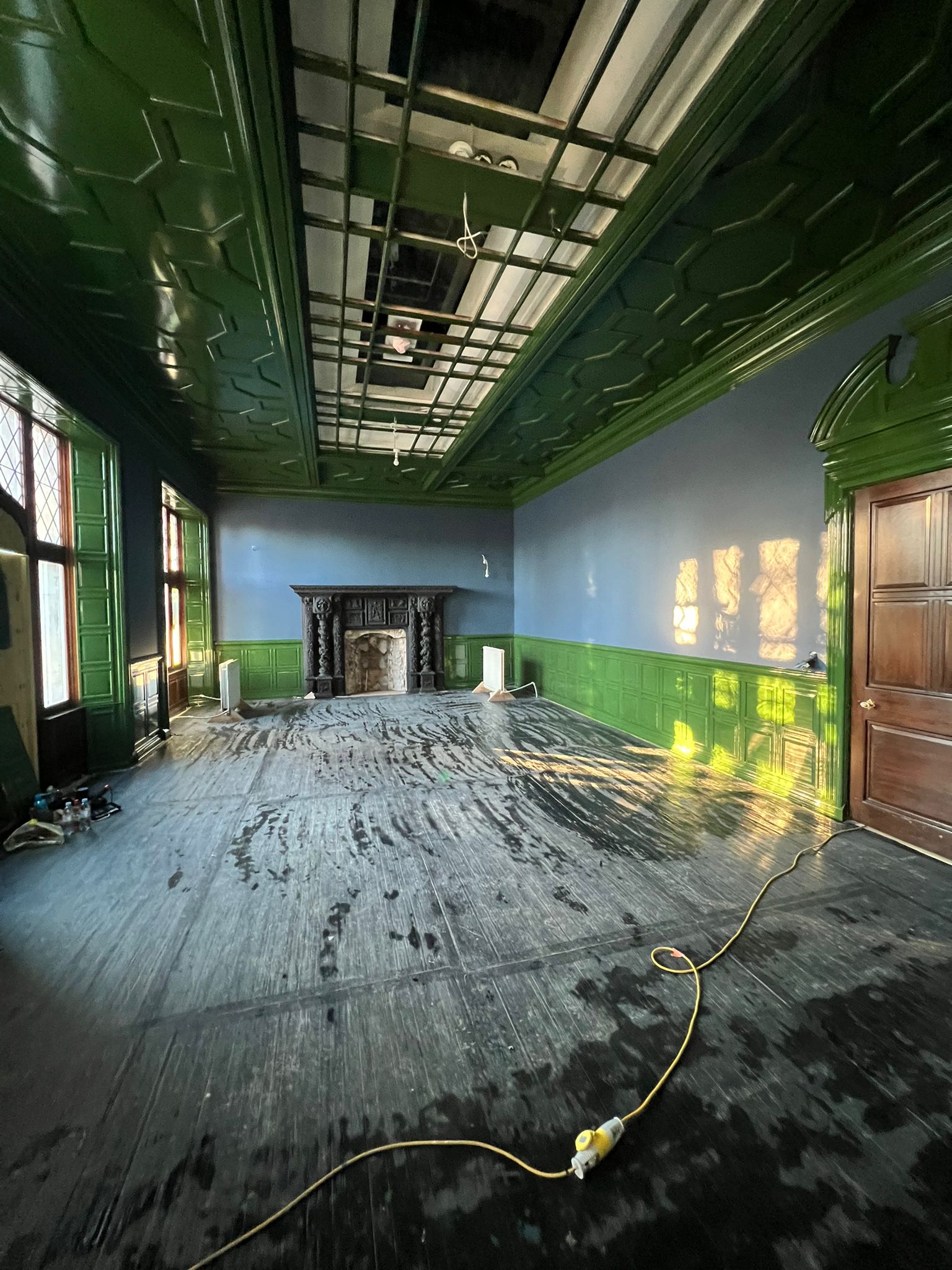
Japanning & Lacquer Finishes: The High-Gloss Interior Trend Redefining Modern Luxury
Introduction
As interior design continues to evolve in 2026, one trend is becoming increasingly clear: surfaces matter more than ever. Designers are moving beyond flat, matte finishes and embracing depth, reflection, and craftsmanship.
At the centre of this shift is the revival of Japanning and lacquer finishes — decorative techniques that combine heritage artistry with contemporary luxury. Specialists like Hare & Humphreys are leading this resurgence, creating bespoke finishes that transform interiors into statement spaces.
What Is Japanning?
Japanning is a decorative technique developed in Europe in the 17th century to imitate the highly prized lacquerwork of East Asia.
It involves applying multiple layers of varnish or lacquer, often in rich black or deep colours, which are then polished to create a smooth, glossy, and highly durable surface.
Traditionally used on furniture, metalwork, and decorative objects, Japanning became a hallmark of luxury interiors and craftsmanship.
What Is Lacquer in Interior Design?
Lacquer is a broader category of finishes that includes both traditional and modern techniques. It creates a hard, reflective surface that enhances durability while delivering a sleek, polished aesthetic.
At Hare & Humphreys, Japanning and lacquer are applied across:
- Walls and ceilings
- Fine joinery and cabinetry
- Furniture and decorative features
Our approach combines traditional hand-applied methods with modern materials, ensuring each finish is both visually striking and long-lasting.
Why Japanning & Lacquer Are Trending in 2026
1. The Rise of High-Gloss Interiors
After years of matte dominance, designers are reintroducing gloss and reflection. Lacquered surfaces bounce light around a space, creating a sense of depth and sophistication.
2. Statement Surfaces Over Minimalism
Minimalism is evolving into something richer and more expressive. Japanning offers bold, dramatic finishes — from deep black gloss to intricate gold detailing — that act as focal points in a room.
3. Heritage Craftsmanship Revival
With growing appreciation for traditional techniques, Japanning represents a return to skilled, hand-applied finishes rooted in centuries of craftsmanship.
4. Durability Meets Luxury
Japanned and lacquered surfaces are not just beautiful — they are also highly durable, making them ideal for both residential and commercial interiors.
The Craft Behind Japanning & Lacquer
These finishes are highly specialised and require precision at every stage.
The process typically involves:
- Preparing and smoothing the surface
- Applying multiple layers of lacquer or varnish
- Heat-drying or curing between coats
- Polishing to achieve a deep, mirror-like finish
In traditional Japanning, finishes are often enhanced with:
- Gold leaf or painted decoration
- Intricate patterns inspired by historical motifs
- Rich colour contrasts, particularly black and gold
The result is a surface that feels layered, luminous, and completely bespoke.
Where Japanning & Lacquer Work Best
Japanning and lacquer finishes are incredibly versatile and can elevate a wide range of interiors:
- Luxury residential homes – feature walls, cabinetry, bespoke furniture
- Hospitality spaces – hotels, restaurants, private members’ clubs
- Heritage buildings – restoration of period finishes
- Commercial interiors – creating bold, high-end visual identity
Their reflective quality also helps enhance light, making spaces feel more dynamic and refined.
Why Choose Hare & Humphreys?
Hare & Humphreys is one of the UK’s leading specialists in decorative finishes, known for combining heritage techniques with contemporary design.
Our Japanning and lacquer services offer:
- Bespoke finishes tailored to each project
- Expertise in both historic restoration and modern interiors
- Collaboration with architects, designers, and private clients
Our work reflects a deep understanding of how traditional craftsmanship can be adapted for today’s interiors — creating finishes that feel both timeless and current.
Japanning vs Modern Lacquer: What’s the Difference?
While both techniques create glossy finishes, there are key distinctions:
- Japanning – traditional, layered technique inspired by Asian lacquer, often with decorative detailing
- Modern lacquer – typically smoother, more uniform, and used for contemporary high-gloss finishes
Together, they offer a spectrum of possibilities — from ornate heritage aesthetics to sleek modern minimalism.
Conclusion: The Return of Reflective Luxury
As interior design continues to embrace texture, light, and craftsmanship, Japanning and lacquer finishes are emerging as defining features of modern luxury.
They offer:
- Depth instead of flatness
- Reflection instead of opacity
- Craftsmanship instead of mass production
For designers and homeowners seeking bold, distinctive interiors, Japanning and lacquer provide a powerful way to create spaces that are both visually striking and timeless.